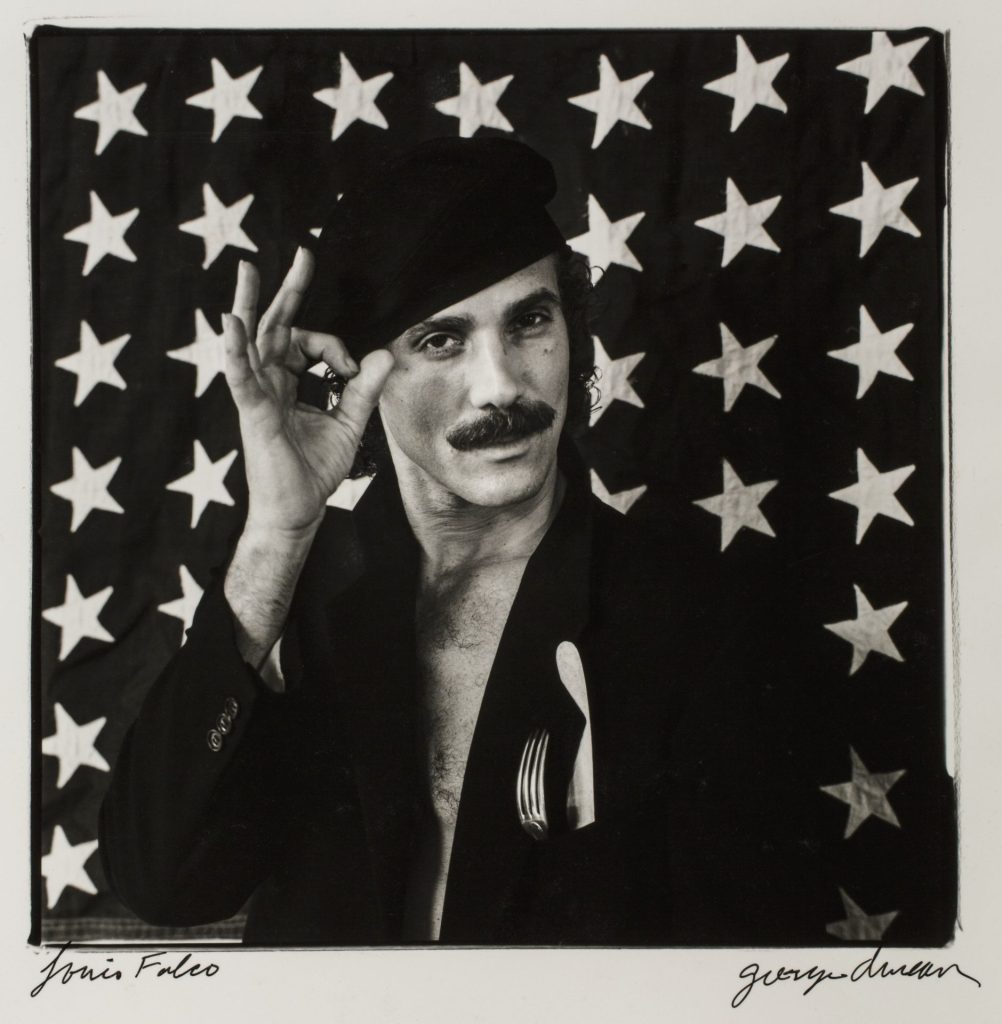
New Orleans artist George Dureau (1930–2014) began making photographs in the 1960s as an aid to his painting and drawing centered on the human figure. Consequently, his photography focused on muscular contours, faces, and poses inspired by western art history. By the mid-1970s, Dureau increasingly explored the camera’s capacity to render the human form clearly and beautifully while experimenting with light, space, and the body as compositional elements.
Dureau’s photography consists primarily of nudes, portraits, and male figure studies composed during collaborative sessions between the artist and models. Dureau met many of the models in his French Quarter neighborhood, a locus of New Orleans’ artistic, gay, and Black communities during the 1970s and ‘80s. Dureau, who was white, often photographed Black men within the contexts of a city built on histories of slavery and racial segregation. When Dureau exhibited his photography for the first time at Galerie De Ville in New Orleans in 1979, the white art establishment was unaccustomed to seeing Black men photographed in a manner that emphasized male beauty, or in classical statuesque poses. Photographs of nude men in a gallery or museum setting was also a novel concept through the 1970s due to discriminatory laws against homosexuality. As much as Dureau’s photographs flaunted those taboos, they illustrate his attempt to use elements of photography—like light, tone, and form—to make a picture that represents both the physical and interior lives of the person in front of the camera.
George Dureau: Selected Photographs is organized by the New Orleans Museum of Art and is supported by the A. Charlotte Mann and Joshua Mann Pailet Endowment.