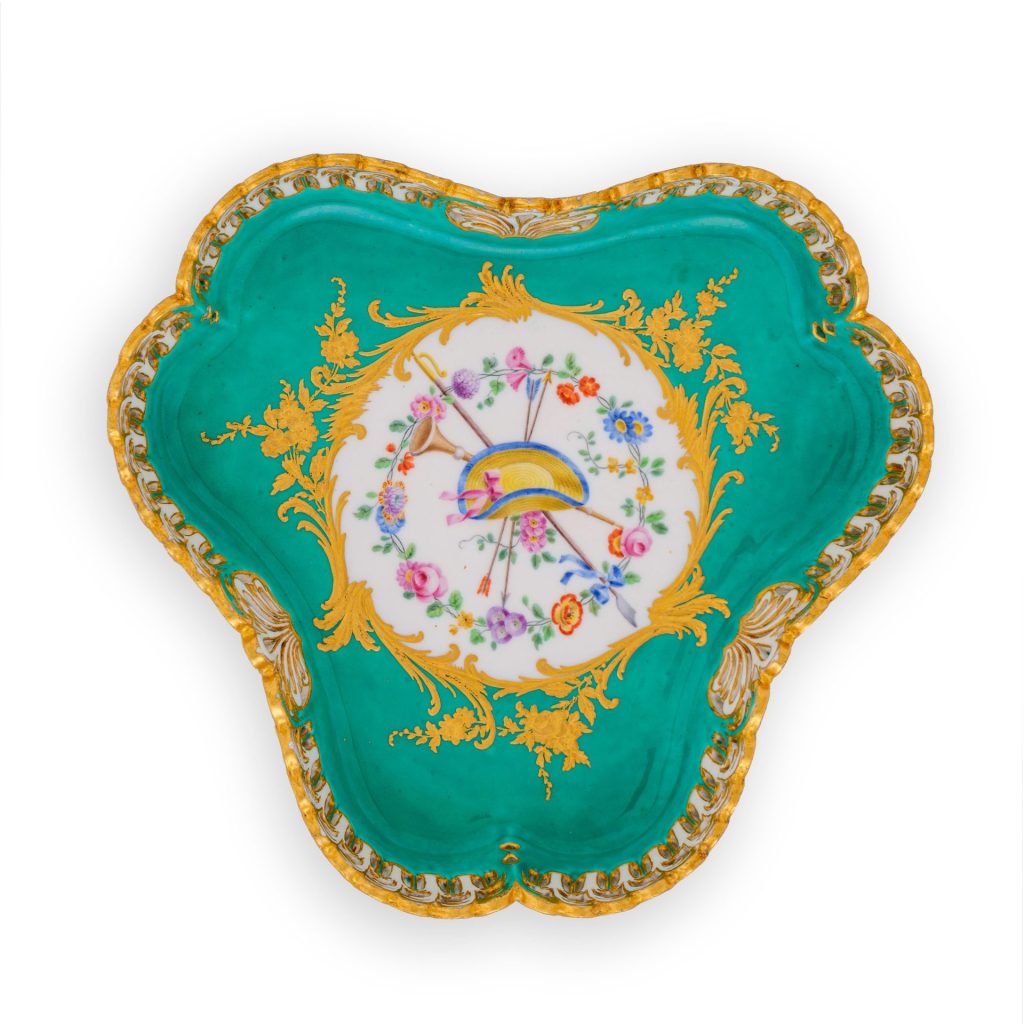
France’s royal porcelain factory at Sèvres, on the outskirts of Paris, has for nearly 300 years produced both decorative and useful ceramic objects of exemplary craft. Creating vases, tea sets, plates, and bowls that signified wealth, power and opulence to the eighteenth-century French court at Versailles, Sèvres factory artists worked alongside chemists and the best sculptors of the Rococo era to produce fine porcelain with luscious glazes in a range of colors.
This exhibition at NOMA celebrates the bequest of a superb group of Sèvres porcelain from collector Thomas B. Lemann. For more than thirty years, working with the best dealers in Paris, London, and New York, Lemann assembled an exquisite group of more than 100 pieces of early French soft-paste porcelain made at Sévres around 1758 to 1766. Lemann’s detailed correspondence shows nuanced study of the finest decorators at the royal factory, and pursuit of rare pieces that were part of celebrated eighteenth-century dinner services owned by Princes, Dukes, and even King Louis XVI himself.
Inspired by a sense of competition with the German manufacturer Meissen, a modest French ceramics factory originated in an unused royal château in Vincennes around 1740. In 1756 the operation relocated to the village of Sèvres, just west of Paris, to be near royal patronage at the Versailles palace. In 1759 King Louis XV bought out all the other factory shareholders, making the operation the “Manufacture Nationale de Sèvres,” and as its main patron the king’s mistress, Madame de Pompadour, promoted an excellence in the arts and sciences of porcelain to cultivate a quintessential French art form.
Through the French Revolution, when the factory was nationalized, and through tumultuous politics, style changes, and advancing technology in the nineteenth-century, Sèvres porcelain remained an important artistic leader in refined French ceramics. The factory still operates today, upholding traditional craft techniques while also engaging international artists to rethink how ceramics can reflect today’s culture.
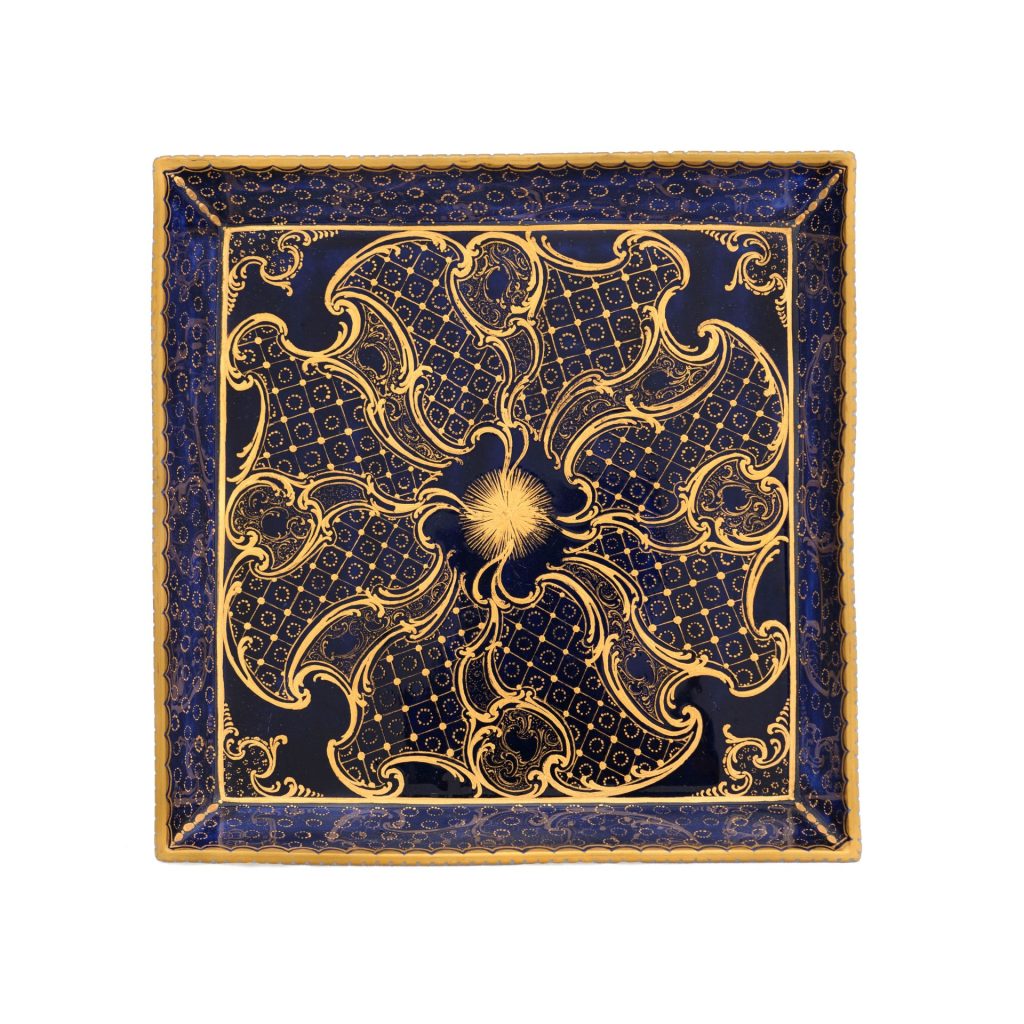
Tray (c. 1755)
1755
Sèvres Porcelain Manufactory (France, founded 1740), Vincent Taillandier (French, active 1753-90)
Porcelain, enameled and gilt
5 7/8 in square
New Orleans Museum of Art, Bequest of Thomas B. Lemann
Tray
1759
Sèvres Porcelain Manufactory (France, founded 1740), Charles Buteux (French, active 1756–1782)
Porcelain, enameled and gilt
1 5/8 x 8 ½ x 7 3/4 in.
New Orleans Museum of Art, Bequest of Thomas B. Lemann
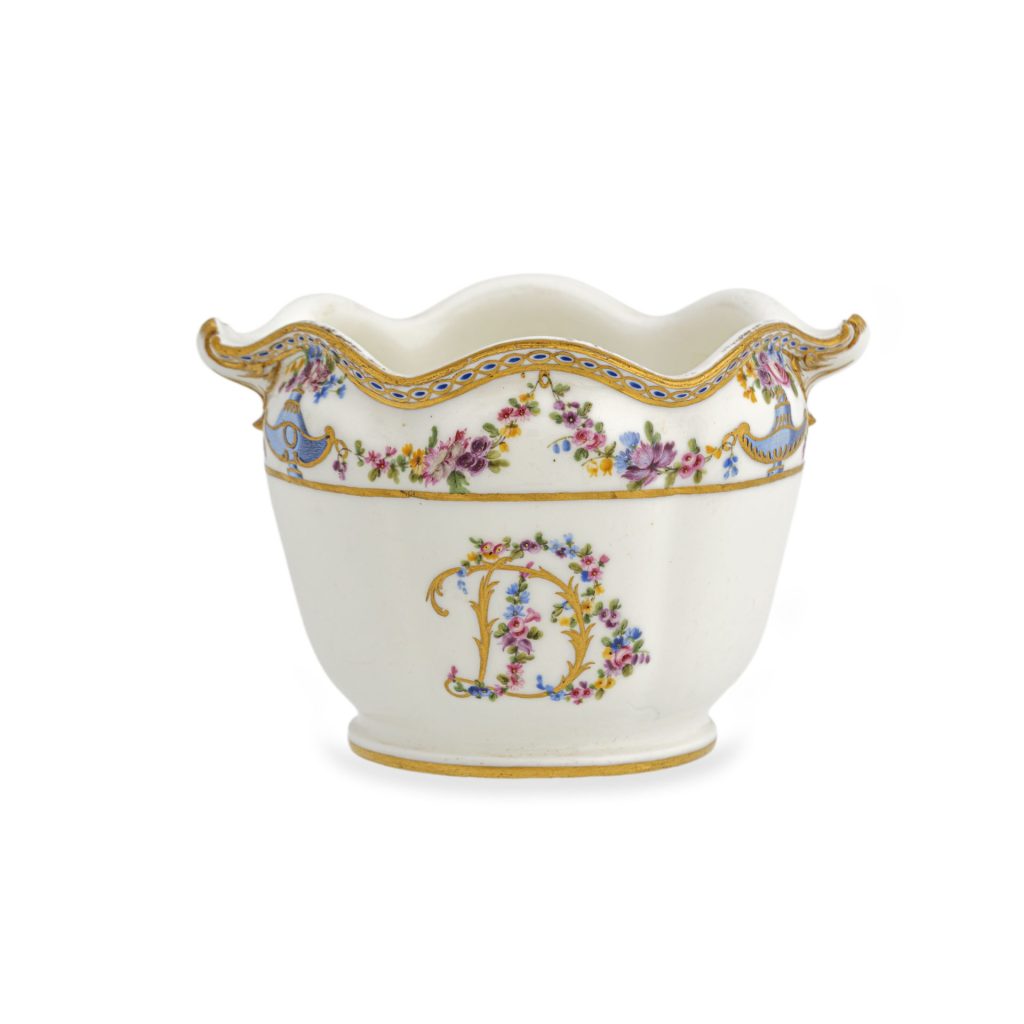
Wine glass cooler from the Madame du Barry service
1771
Sèvres Porcelain Manufactory (France, founded 1740), Nicolas Catrice (French, active 1757–74)
Porcelain, enameled and gilt
3 7/8 x 6 1/8 in diameter
New Orleans Museum of Art, Bequest of Thomas B. Lemann
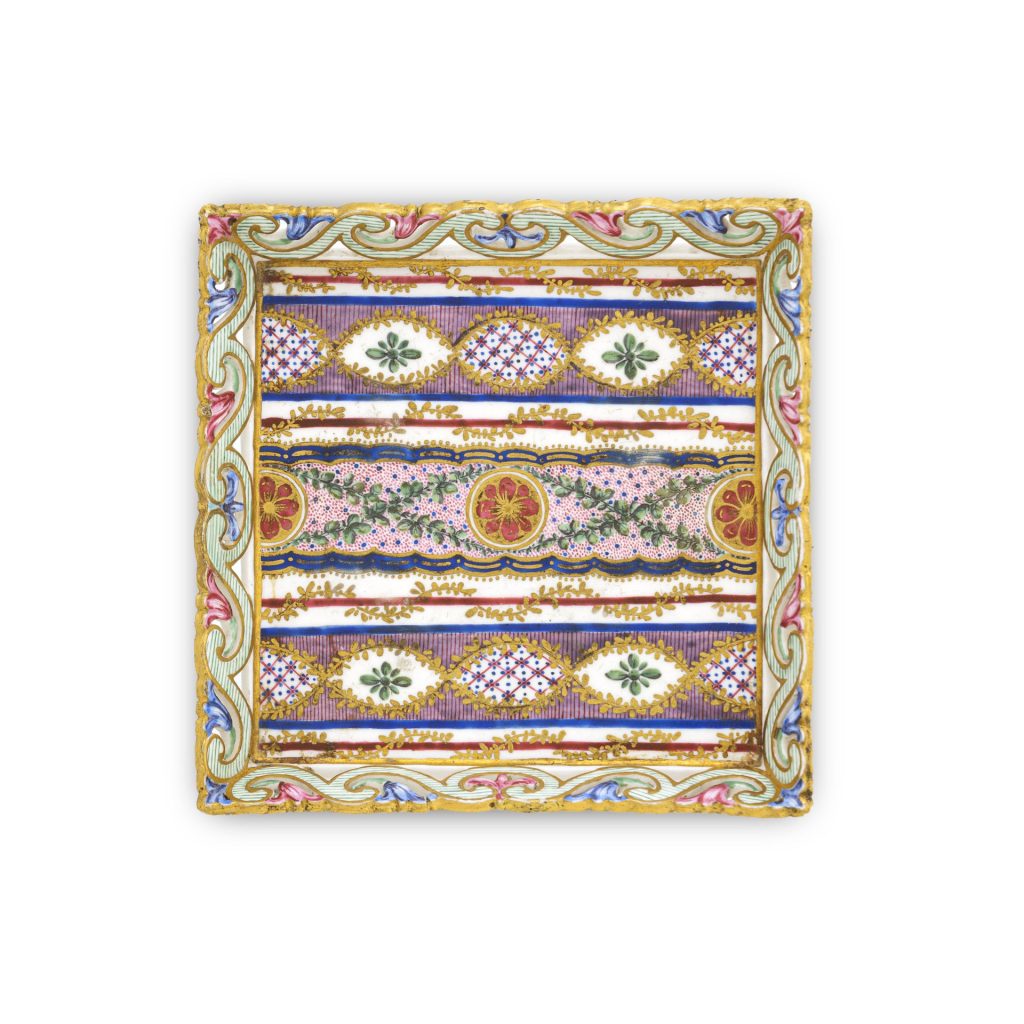
Tray (plateau carré à jour)
1766
Sèvres Porcelain Manufactory (France, founded 1740), Painted by Charles-Louis Méreaud (French, active 1756–80)
Porcelain, enameled and gilt
5 ⅞ x 5 ⅞ x 1 in.
New Orleans Museum of Art, Bequest of Thomas B. Lemann
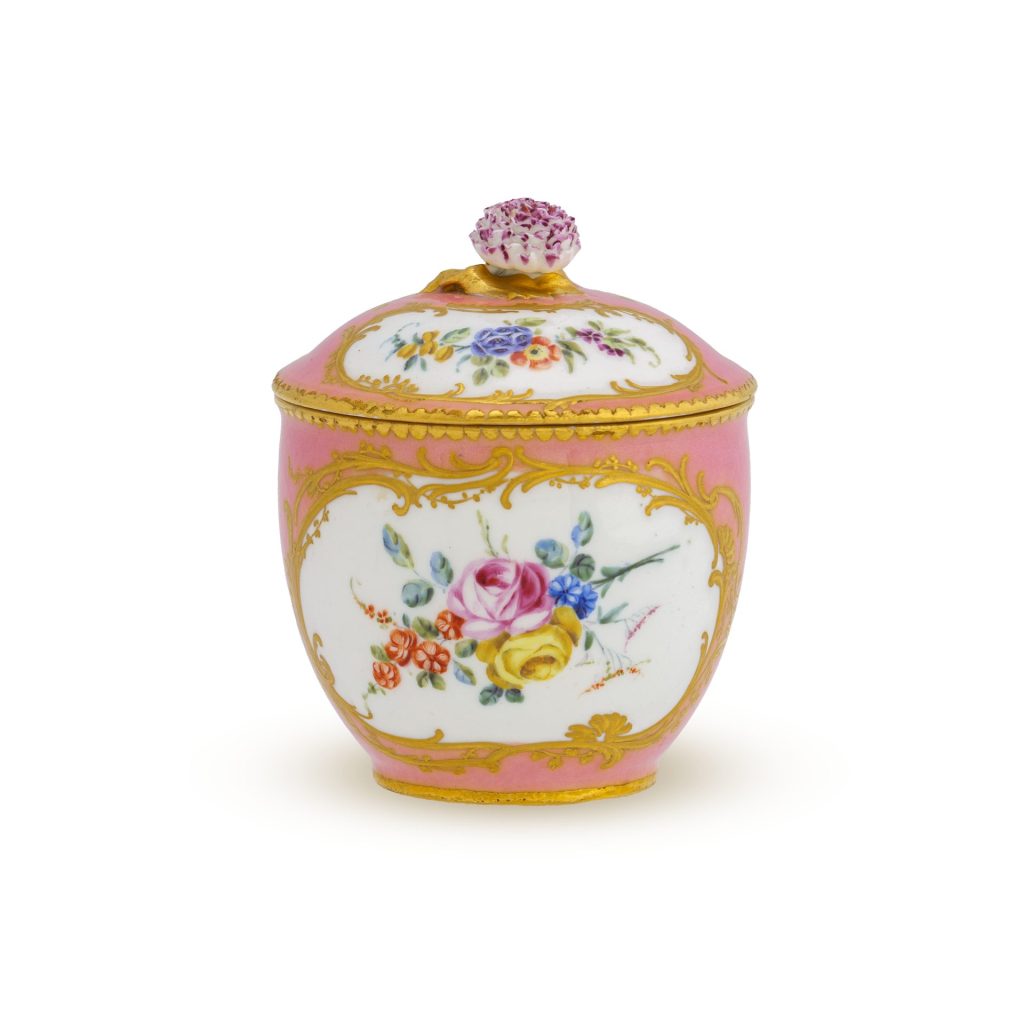
Sugar Bowl from a Madame de Pompadour service
1758
Sèvres Porcelain Manufactory (France, founded 1740), Vincent Taillandier (French, active 1753-1790)
Porcelain, enameled and gilt
3 ¾ x 3 in diameter
New Orleans Museum of Art, Bequest of Thomas B. Lemann
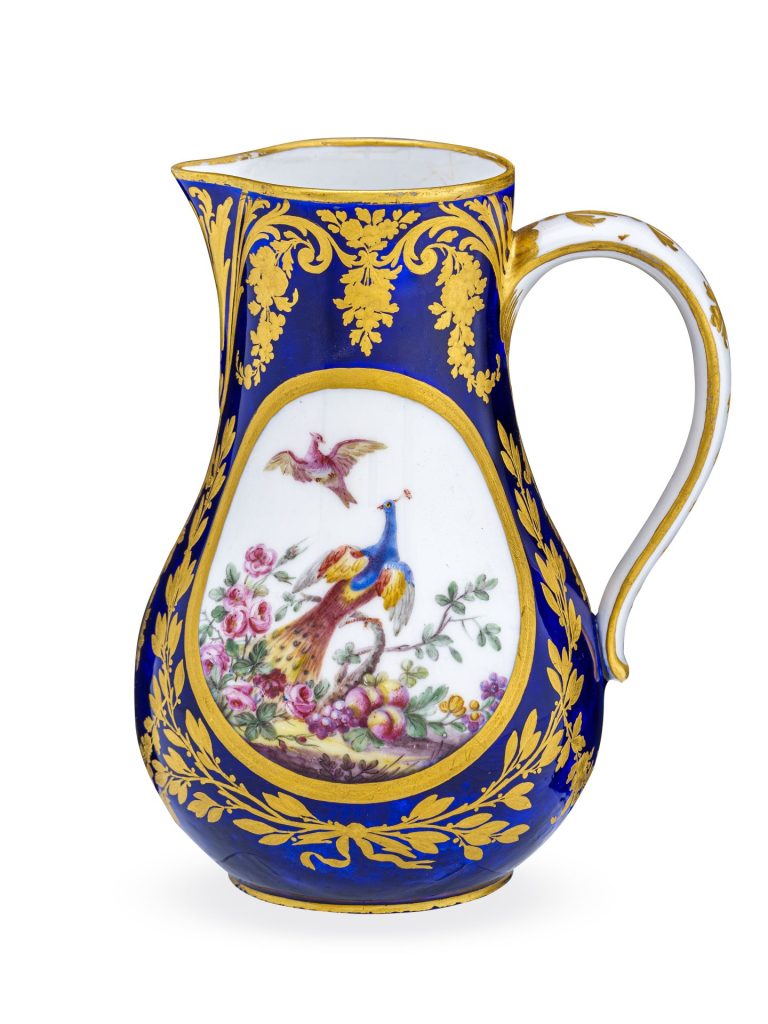
Water jug (pot a l’eau)
1780
Sèvres Porcelain Manufactory (France, founded 1740), Painted by Denis Levé (French, active 1754–1805), Gilded by Etienne-Henry Le Guay (French, active 1748–97)
Porcelain, enameled and gilt
6 7/8 x 5 1/2 in.
New Orleans Museum of Art, Bequest of Thomas B. Lemann
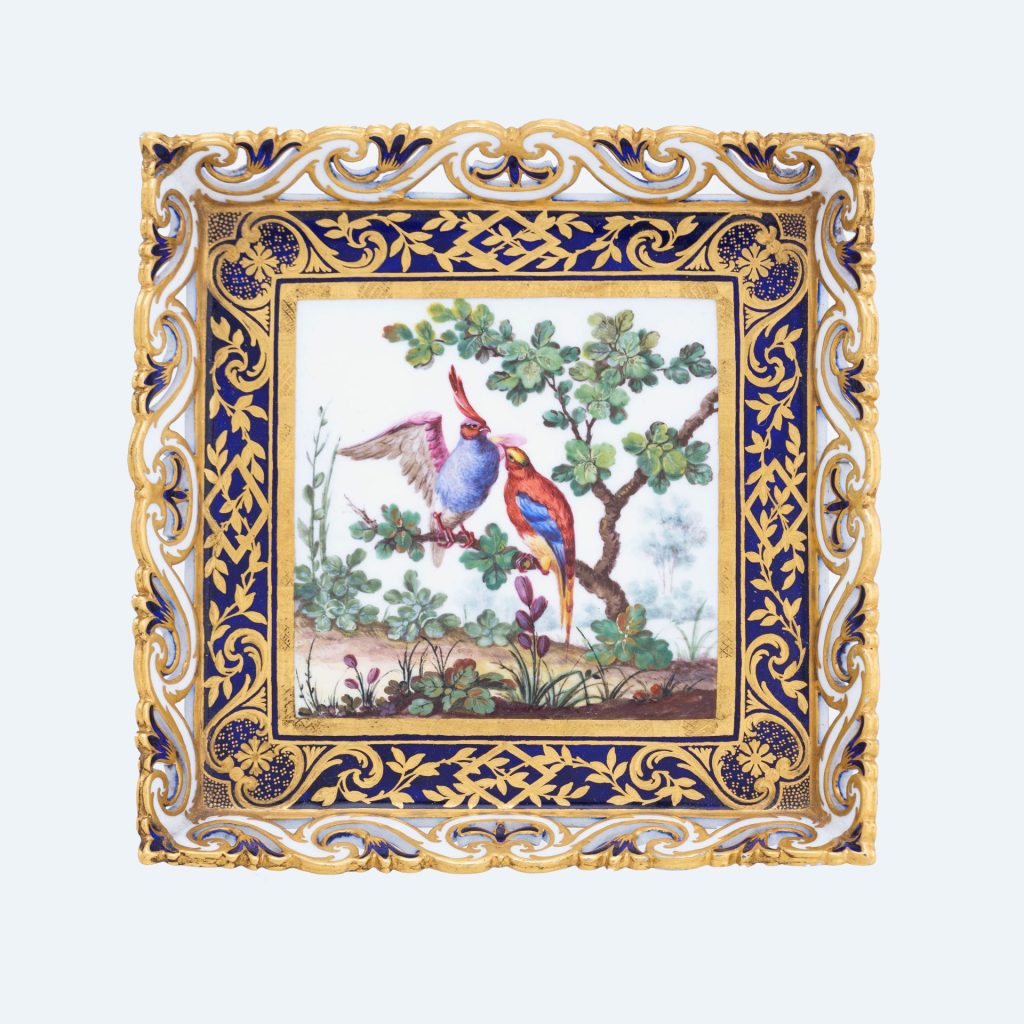
Tray with birds based on George Edwards’s “A Natural History of Uncommon Birds (1743–51)”
1765
Sèvres Porcelain Manufactory (France, founded 1740), Painted by François-Joseph Aloncle (French, 1734–81)
Porcelain, enameled and gilt
6 x 6 x 1 in.
New Orleans Museum of Art, Bequest of Thomas B. Lemann
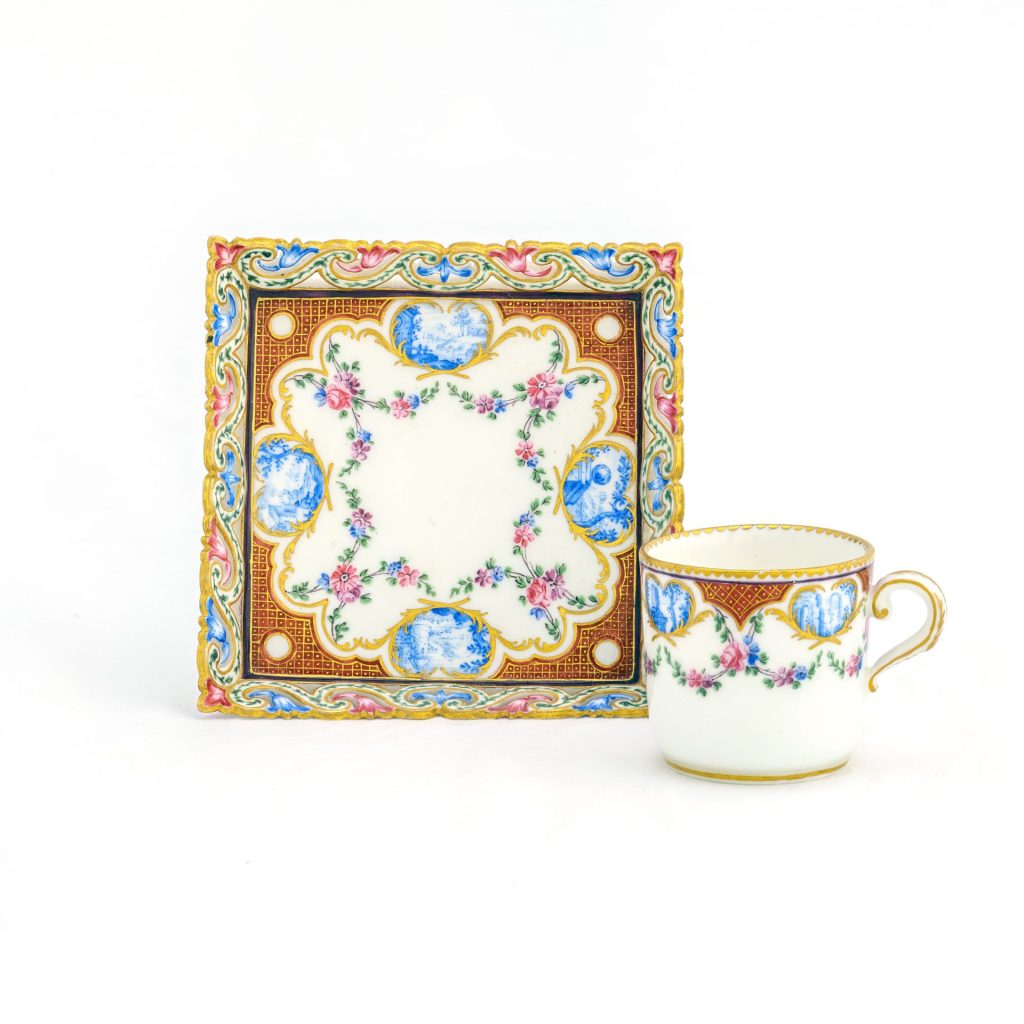
Cup and Tray
1762
Sèvres Porcelain Manufactory (France, founded 1740), Louis-Jean Thévenet (French, 1707–c. 1778)
Porcelain, enameled and gilt
4 ¼ x 4 ¼ x ⅞ in.
New Orleans Museum of Art, Bequest of Thomas B. Lemann
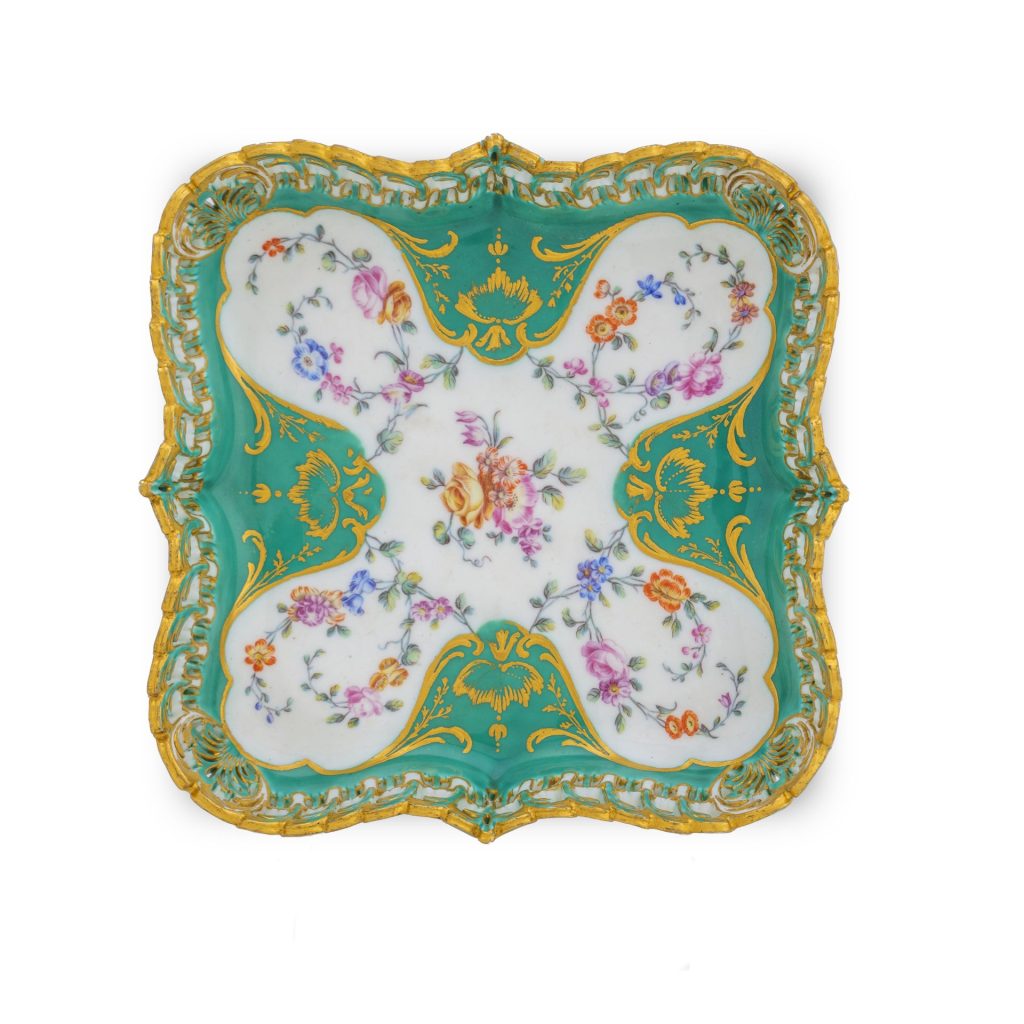
Tray (plateau carré à jour)
1758
Sèvres Porcelain Manufactory (France, founded 1740)
Porcelain, enameled and gilt
6 ⅞ x 6 ⅞ x 1 ⅝ in
New Orleans Museum of Art, Bequest of Thomas B. Lemann
Gallery Talk: Curator Mel Buchanan on Sèvres Magnifique: French Porcelain from the Collection of Thomas B. Lemann
Wed, June 24th at 12:30 PM - 1:00 PM
This week’s gallery talk will be hosted by Mel Buchanan, NOMA’s RosaMary Curator of Decorative Arts & Design. This talk will take place at 12:30 pm. Read More
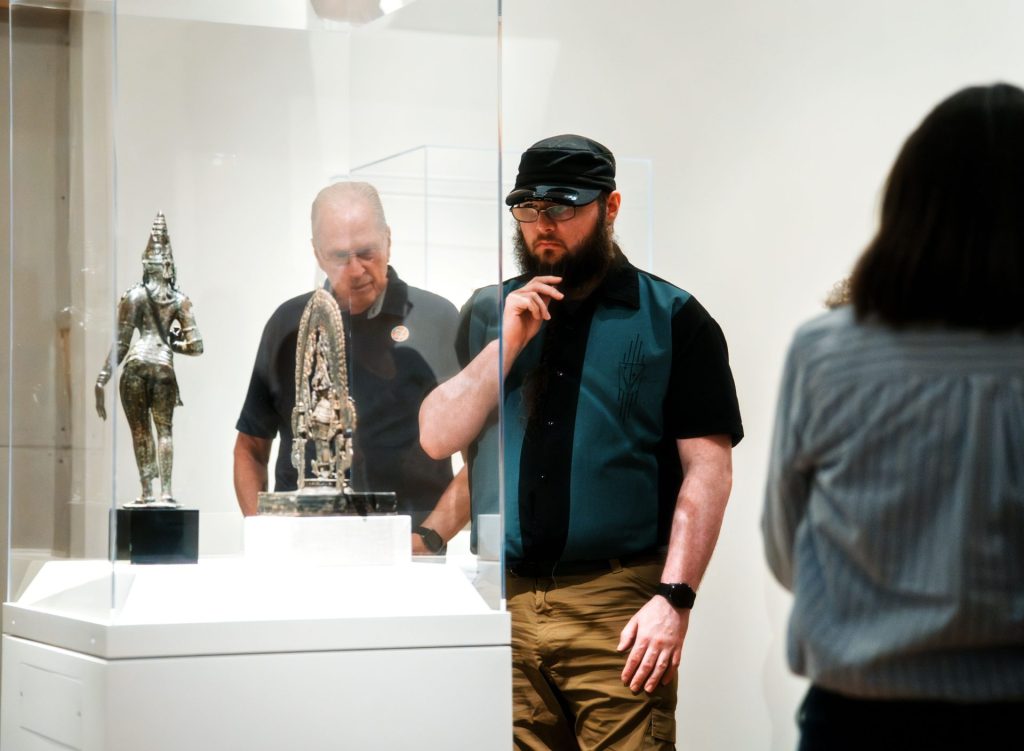
Musical Encounters: Sèvres Porcelain
Wed, August 26th at 6:00 PM - 6:30 PM
Join local musicians and scholars for our Musical Encounters gallery talks on Wednesdays April 1, June 10, August 26, and November 11, 2026. Read More